Creating Great Social Media Content as a 3D Designer
Building your audience on video, image and text-based social media platforms
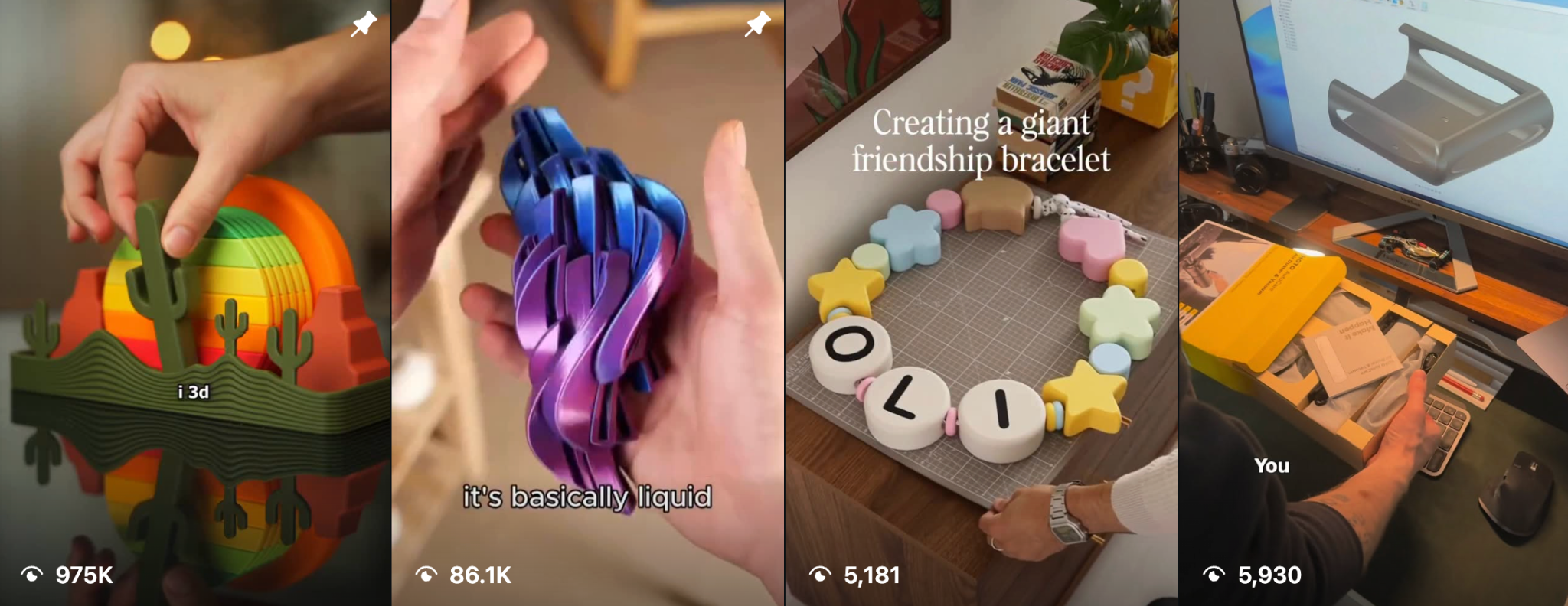
Your social media presence is an important part of growing your business, selling your designs, and building a community around your work. Platforms like Instagram, TikTok, Threads, Facebook, and X all function slightly differently, but can serve an crucial purpose: Sharing your designs with the wider world. While it’s very important, you don’t need to become a full-time content creator to grow as a 3D designer online.
In today’s social media landscape, strong content is often less about expensive production and more about presentation, pacing, and understanding how platforms prioritize engagement. The good news is that 3D printing content already has a huge advantage; satisfying processes, moving parts, transformations, and finished prints naturally perform well on visual platforms like Instagram.
The goal is to present your work in a way that helps more people discover it. In this article we are practical strategies for designers to create stronger social content, improve their online visibility, and grow their following.
Understanding how the algorithms work
At a basic level, social platforms prioritize content that keeps users engaged. That means platforms pay close attention to:
• Watch time
• Shares
• Saves
• Comments
• Replays
• Swipe-through behavior
These actions signal that people find the content interesting, useful, or entertaining.
One important thing many creators don’t realize is that your content is usually shown to a smaller test audience first. If that audience responds positively, for example, watching longer, engaging, or sharing, the platform is much more likely to expand distribution and push the content to a wider audience.
Strong early engagement is often what drives reach.
Reels and short-form video are extremely powerful
Right now, short-form video remains one of the strongest formats for reach. For 3D designers, this is actually ideal. Prints naturally create visually satisfying moments in videos including:
• Timelapses
• Assembly clips
• Print reveals
• Moving mechanisms
• Before-and-after transformations
• Functional demonstrations
Implementing a few simple best practices into your video can help engagement significantly:
• Hook viewers within the first two seconds
• Keep videos concise (often 10–30 seconds works best)
• Start with movement rather than static shots
• Show the most exciting moment early
Often, revealing the final print immediately creates curiosity that encourages viewers to keep watching.
Your hook matters more than almost anything else
The first one or two seconds of content are critical. Most viewers decide almost immediately whether they’re going to continue watching. That means your opening needs to create curiosity or visual interest very quickly.
Some strong hooks include:
• Showing the final result immediately
• Asking a question
• Revealing a surprising mechanism or transformation
• Highlighting a satisfying print moment
• Showing movement instantly
The goal is simple: give viewers a reason to stay.
Encourage engagement naturally
Engagement signals help platforms understand that people care about your content.
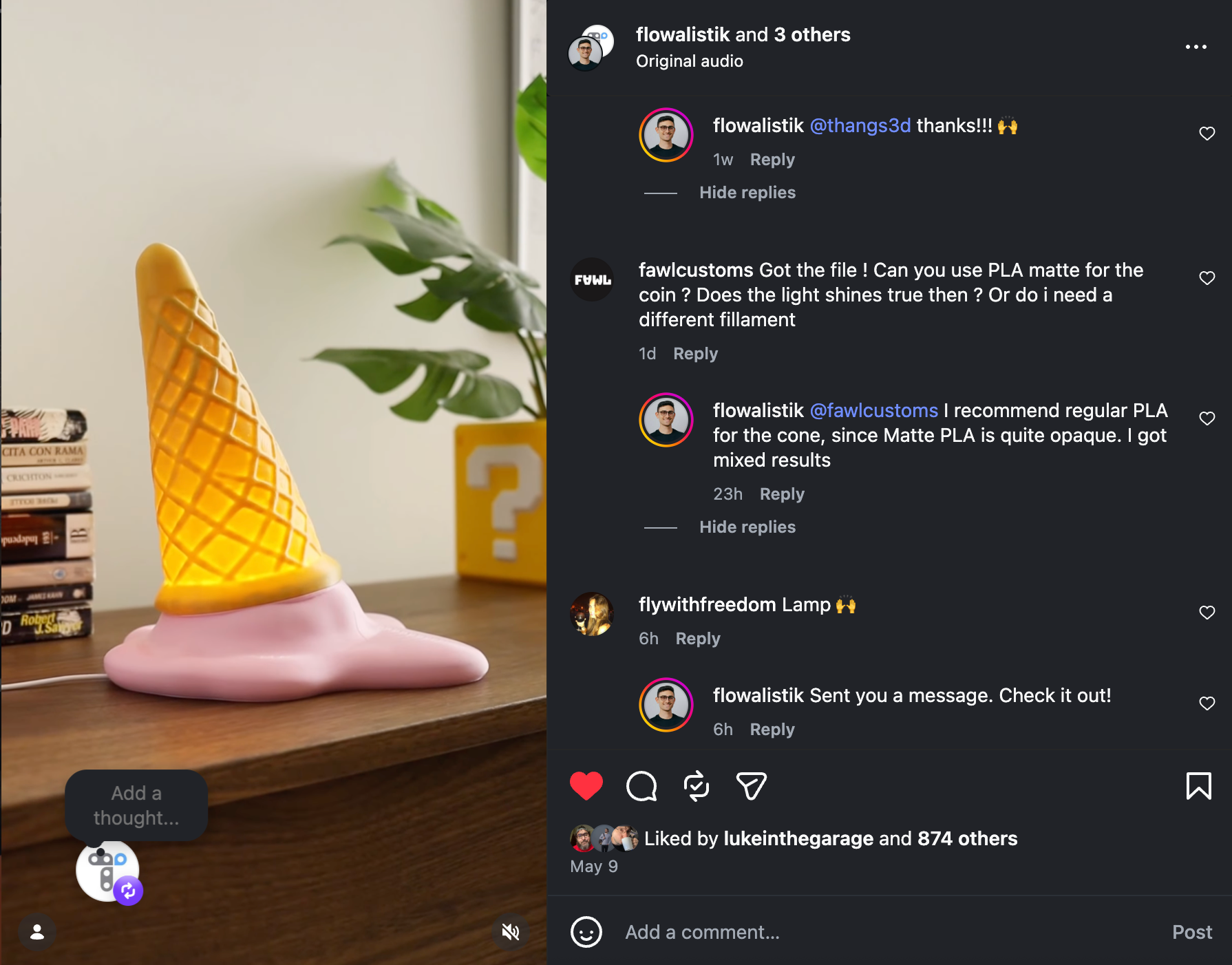
Simple prompts can make a major difference:
• Ask viewers to choose between two versions
• Ask which color or variation they prefer
• Invite opinions or suggestions
• Respond to comments quickly
Active conversations help build stronger communities while also signaling positive engagement to the algorithm.
Creators who consistently interact with their audience often build stronger long-term growth than those who only focus on posting.
Don’t Ignore Carousel Posts
While short-form video performs extremely well, carousel posts are still incredibly valuable. Carousels encourage users to spend more time interacting with a post, and longer interaction time is a strong positive signal for discoverability.
Carousel ideas that work well for designers:
• Design breakdowns
• Step-by-step processes
• Before-and-after improvements
• Printing tips
• Design collections
• Assembly guides
• “Swipe to reveal” style posts
The strongest carousels feel like small visual stories that encourage viewers to keep swiping.
Consistency builds momentum
Posting consistency matters more than creating perfect content. Platforms generally favor accounts that post regularly and stay active over time. For many designers, aiming for around three posts per week is already enough to build momentum.
A healthy mix often works best:
• Reels for reach
• Carousels for deeper engagement
• Stories for daily activity and quick updates
Stories are especially useful because they allow you to stay visible without needing to produce polished content every day.
Over time, consistency signals that your account is active and valuable to recommend.
Editing can dramatically improve performance
Good editing for your videos keeps viewers watching longer. You don’t need cinematic production quality, even small improvements can make content feel significantly more engaging.
Helpful editing practices:
• Keep cuts fast and clean
• Remove pauses or inactive moments
• Use simple text overlays to explain what’s happening
• Add subtitles when possible as many viewers watch without sound
• Match cuts to movement or sound for smoother pacing
A well-paced 15-second video will almost always outperform a slow 45-second one.
The goal is simply to maintain viewer attention.
Simple tools work perfectly fine
You don’t need expensive software to create effective content. Many designers create excellent social posts using tools like:
• CapCut
• Instagram’s built-in editor
• Basic phone editing apps
The most important thing is clarity, pacing, and storytelling; not complicated effects. In many cases, simple edits and strong presentation outperforms overproduced content.
Text-based platforms matter too: X, Threads, and Bluesky
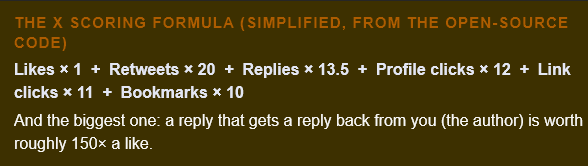
While visual platforms like Instagram are great for showcasing prints, platforms like X, Threads, and Bluesky work a bit differently as they’re much more conversation-driven.
These platforms prioritize:
• Replies
• Reposts
• Discussions
• Ongoing interaction
That means it’s often less about creating a “perfect” post, and more about posting things people want to respond to.
For designers, this opens up a lot of opportunities:
• Share work-in-progress updates
• Post failed prints or experiments
• Ask for feedback between versions
• Share design thoughts or challenges
• Show behind-the-scenes process moments
The first line of your post matters a lot here. Simple hooks like:
• “Would you print this?”
• “This took 12 hours.”
• “I redesigned this 6 times.”
…can dramatically increase engagement and curiosity.
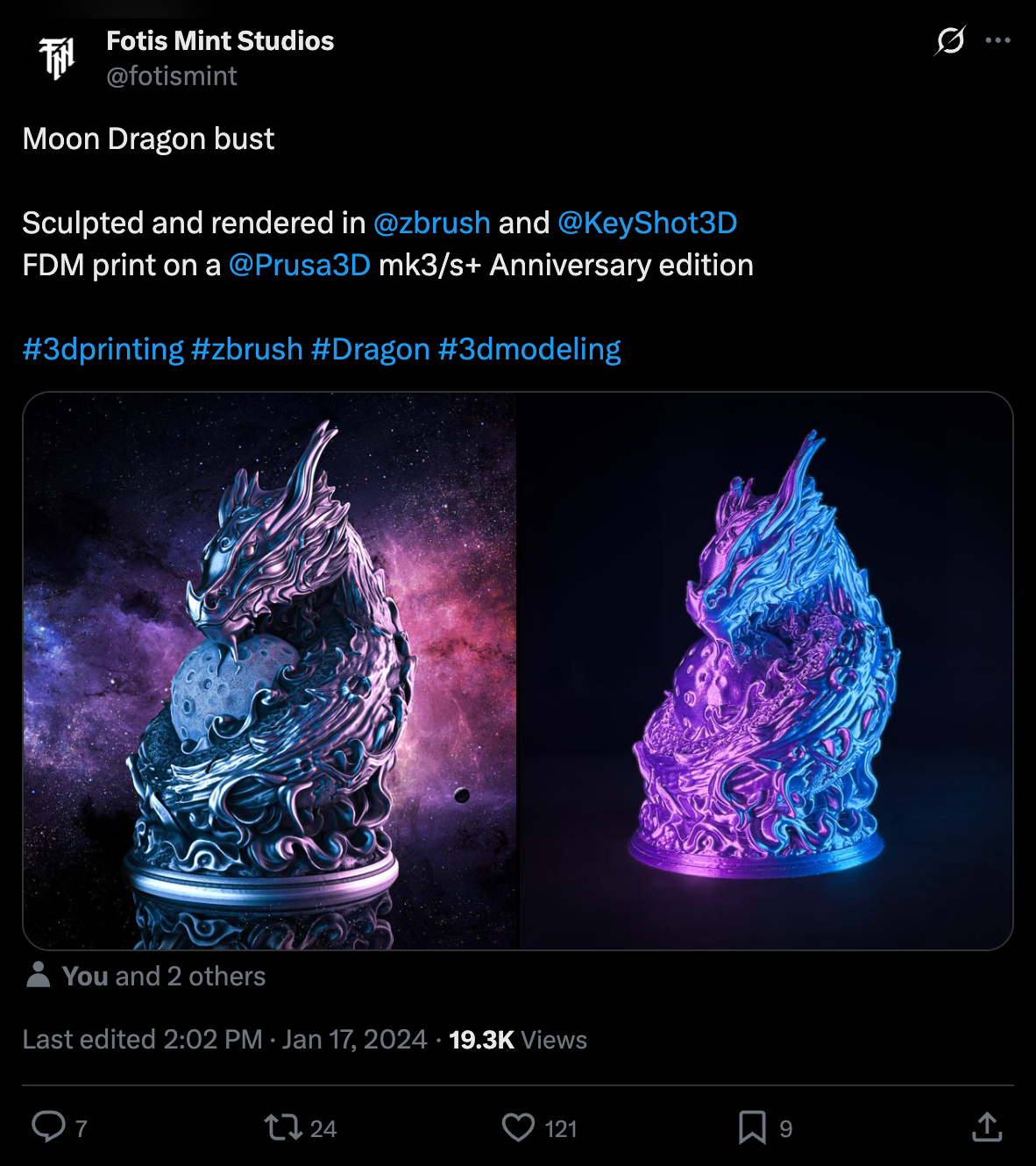
Even though these platforms are more text-focused, visuals still matter. A clean render or satisfying print photo helps stop the scroll and quickly communicate what the design is.
And just like with Instagram, consistency matters more than perfection. Posting regularly, replying to others, and participating in community conversations helps build visibility over time.
The best part is that you don’t need entirely new content for each platform. Often, you can reuse the same photo or video and simply adjust the caption, hook, or tone slightly for each audience.
You’ve already done the hard part
As a designer, you’ve already conquered the hardest parts: design and creativity. Social media is simply the bridge that helps more people discover your work.
You don’t need perfect videos, massive production setups, or viral trends to grow. Consistently sharing your process, showing your designs clearly, and making content easy to engage with can go a very long way over time.
The algorithm rewards attention, and great designs naturally attract it when they’re presented well. And remember, we’re excited to see what you’re creating and potentially share your work! Don’t forget to tag Thangs or add us as a collaborator on Instagram to be considered!


