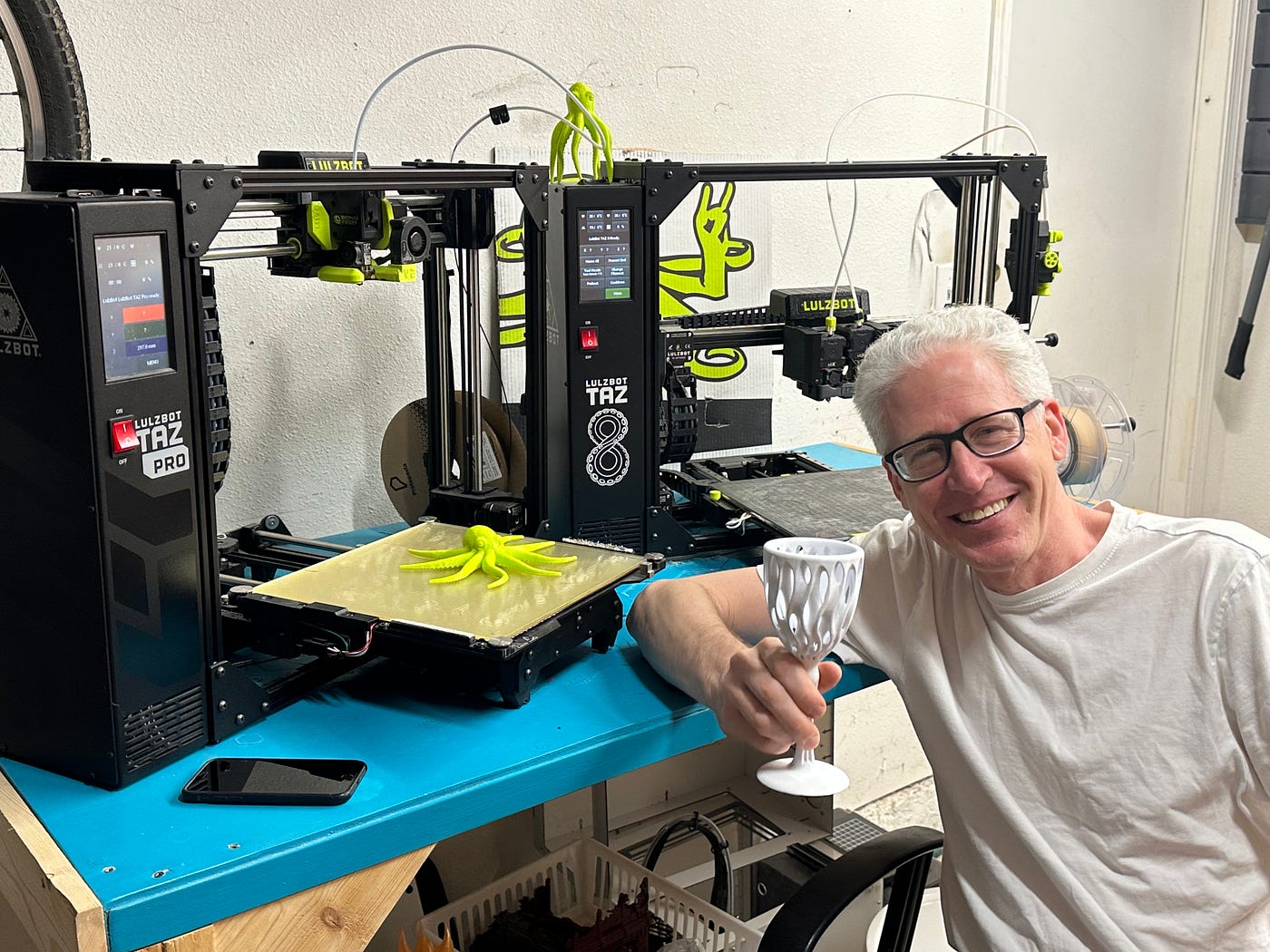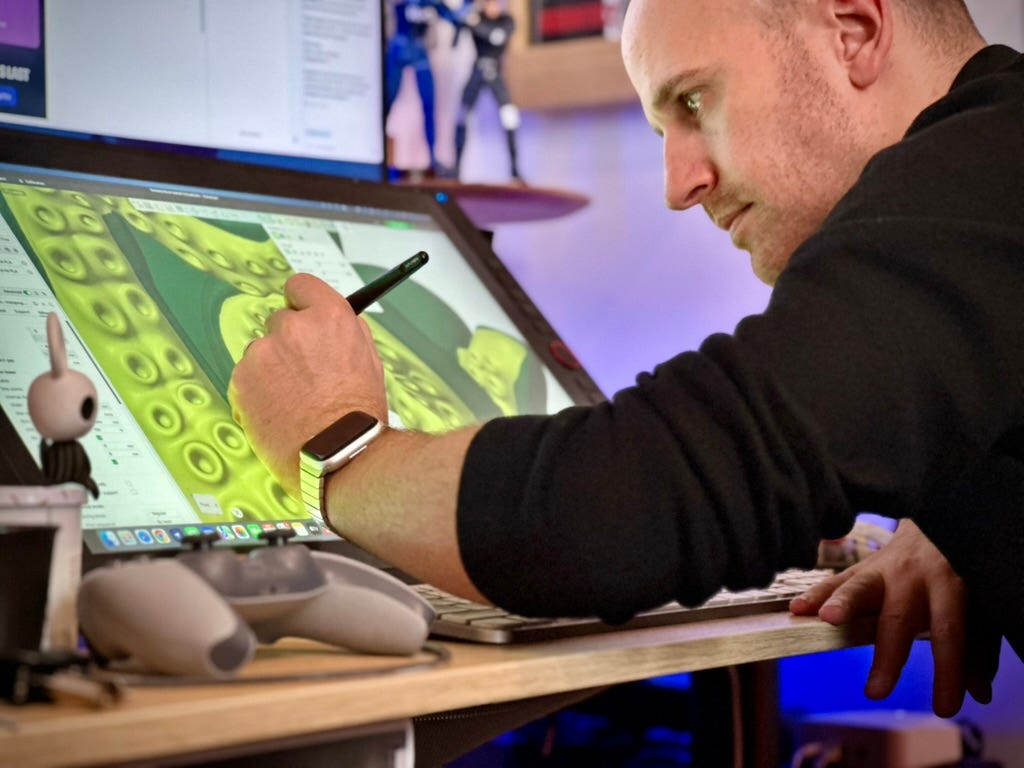
Behind the Designs: Pierre-Henri of Holoprops
What happens when a game artist starts designing for the real world? Meet Holoprops.
What happens when a game artist starts designing for the real world?
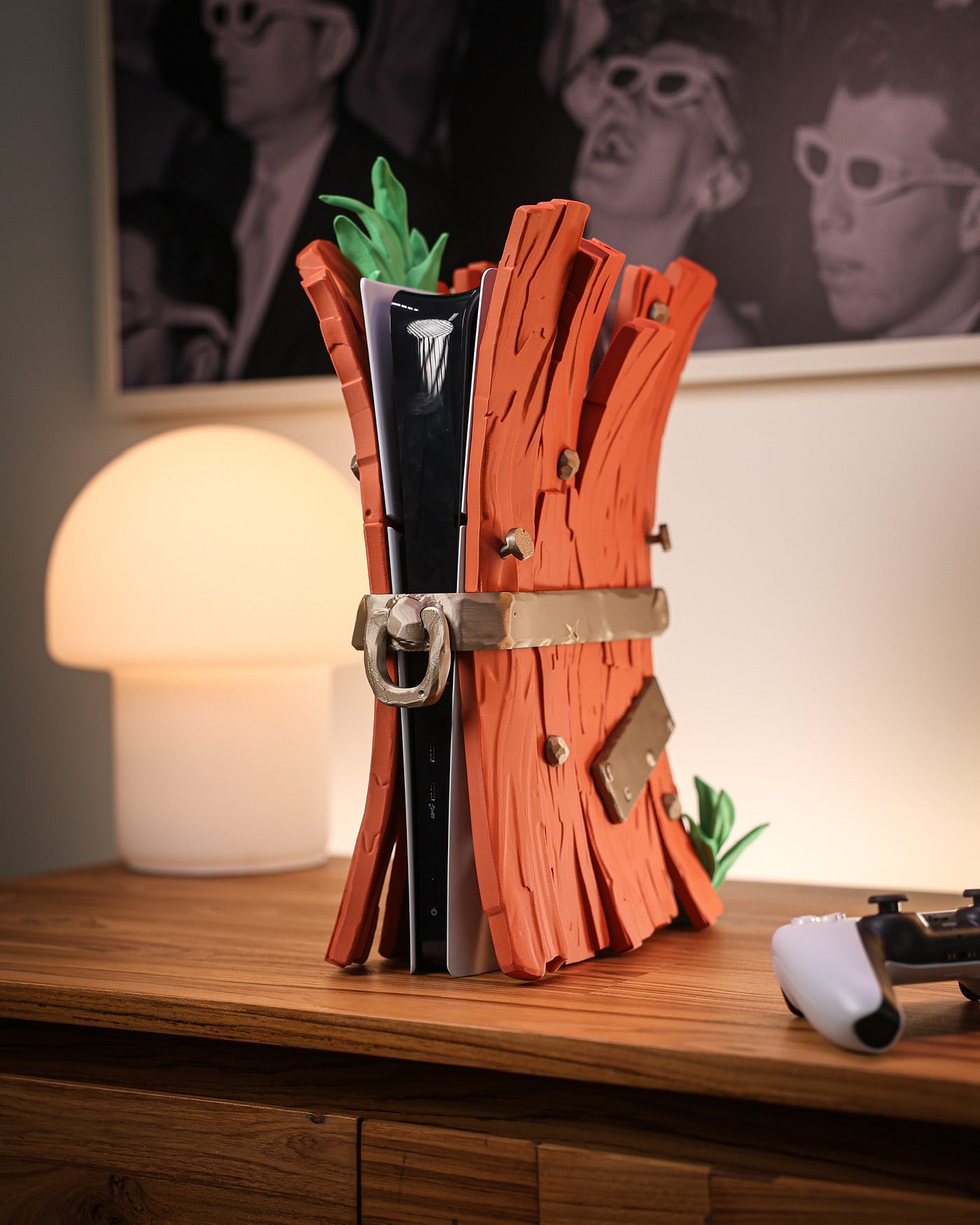
Holoprops sits at the intersection of gaming culture, sculptural design, and technical precision. Led by Montreal-based designer Pierre-Henri, the studio transforms everyday gaming accessories into bold, expressive objects; pieces that feel as much like collectibles as they do functional prints.
With a background in the video game industry and over three decades immersed in gaming culture, Pierre-Henri brings a deeply personal perspective to every design. What started as a creative outlet has evolved into a distinct body of work rooted in nostalgia, experimentation, and a constant push toward what 3D printing can become.
A Style Shaped by Games, Film, and Form
Pierre-Henri describes his work as stylized, sculptural, and heavily influenced by video games.
Having grown up with everything from the Game Boy to the PlayStation 5, those experiences naturally inform the shapes, silhouettes, and identity of his designs. His time as a 3D artist in the gaming industry further refined that approach, teaching him to think in terms of exaggeration, readability, and visual impact.
But the inspiration doesn’t stop at games. Worlds like The Lord of the Rings, films like The Matrix, and anime such as Akira and Ghost in the Shell all leave their mark. Together, they form a visual language that runs through every Holoprops creation; part nostalgia, part reinterpretation.
At its core, his work is a collection of stylized sculptures, designed to be both functional and emotionally engaging.
A Non-Linear Creative Path
Originally from France and now based in Montreal, Pierre-Henri’s journey into design wasn’t straightforward.
He began by studying cinema in Paris, moved into motion design, and spent years working in advertising before transitioning into 3D and eventually into the video game industry. Over eight years at Compulsion Games, he contributed to titles like We Happy Few and South of Midnight, working across the full development cycle.
Along the way, he explored entirely different paths; even training as a flight attendant at one point. That curiosity still defines his approach today: a constant drive to learn, experiment, and evolve.
From Hobby to Holoprops
Pierre-Henri started 3D printing in 2020 as a way to stay creatively active while transitioning into a more managerial role in his career.
What began as a simple hobby quickly grew into something more. The ability to design something digitally and then hold it in his hands a few hours later became addictive. Over time, that curiosity turned into a passion, then a side project, and eventually into Holoprops.
Today, it stands as a growing brand built on consistency, exploration, and a clear design voice.
Designing with Authenticity
Choosing what to design hasn’t always been straightforward.
Early on, Pierre-Henri experimented with more strategic approaches; trying to predict trends or design for perceived demand. But those attempts rarely led to satisfying results. What he discovered instead is simple: the strongest designs come from genuine interest.
He now focuses on ideas that excite him personally, concepts he enjoys exploring and objects he’s proud to bring into the physical world. That sense of authenticity carries through the work, often resonating more deeply with others.
Designing for himself first, with intention and curiosity, has become the foundation of his process.
The Challenge Beyond Design
While designing itself is a source of pure enjoyment, everything that comes after can be more difficult ; especially social media.
The fast pace, constant pressure to perform, and focus on metrics don’t come naturally to him. Over time, he’s shifted away from chasing visibility and toward creating content that feels aligned with his work.
For Pierre-Henri, meaningful engagement matters more than scale. A smaller audience that genuinely connects with the work is far more valuable than broad but disconnected reach.
Inspiration Through Making
One of the most powerful aspects of 3D printing, for Pierre-Henri, is the transformation from idea to object.
There’s something almost universal in that process; taking something imagined and bringing it into reality. It taps into the same instinct many people had as children: imagining worlds and wanting to make them real.
That sense of possibility continues to drive his work, along with a fascination for where the technology is heading. From multi-material printing to new manufacturing methods like SLA and SLS, he’s constantly exploring how new tools can expand what’s possible.
Constraints are part of the process, but they’re also what make it interesting.
A Focus on Challenge and Exploration
Most of his work naturally leans toward gaming-related objects, but the real driver is challenge.
Pierre-Henri is drawn to projects that push him out of his comfort zone; designs that require problem-solving, experimentation, and new ways of thinking. If something feels too predictable, it quickly loses its appeal.
That constant search for challenge is what keeps the work evolving.
Community and Collaboration
One of the most rewarding parts of sharing his work is seeing how others interact with it.
While piracy remains a concern, inspiration is something he fully embraces. Seeing elements of his designs influence others is a sign that the work resonated.
More than anything, he values direct interactions; messages, conversations, and long-term exchanges with people who connect with what he creates. These smaller, more personal interactions often carry the most meaning.
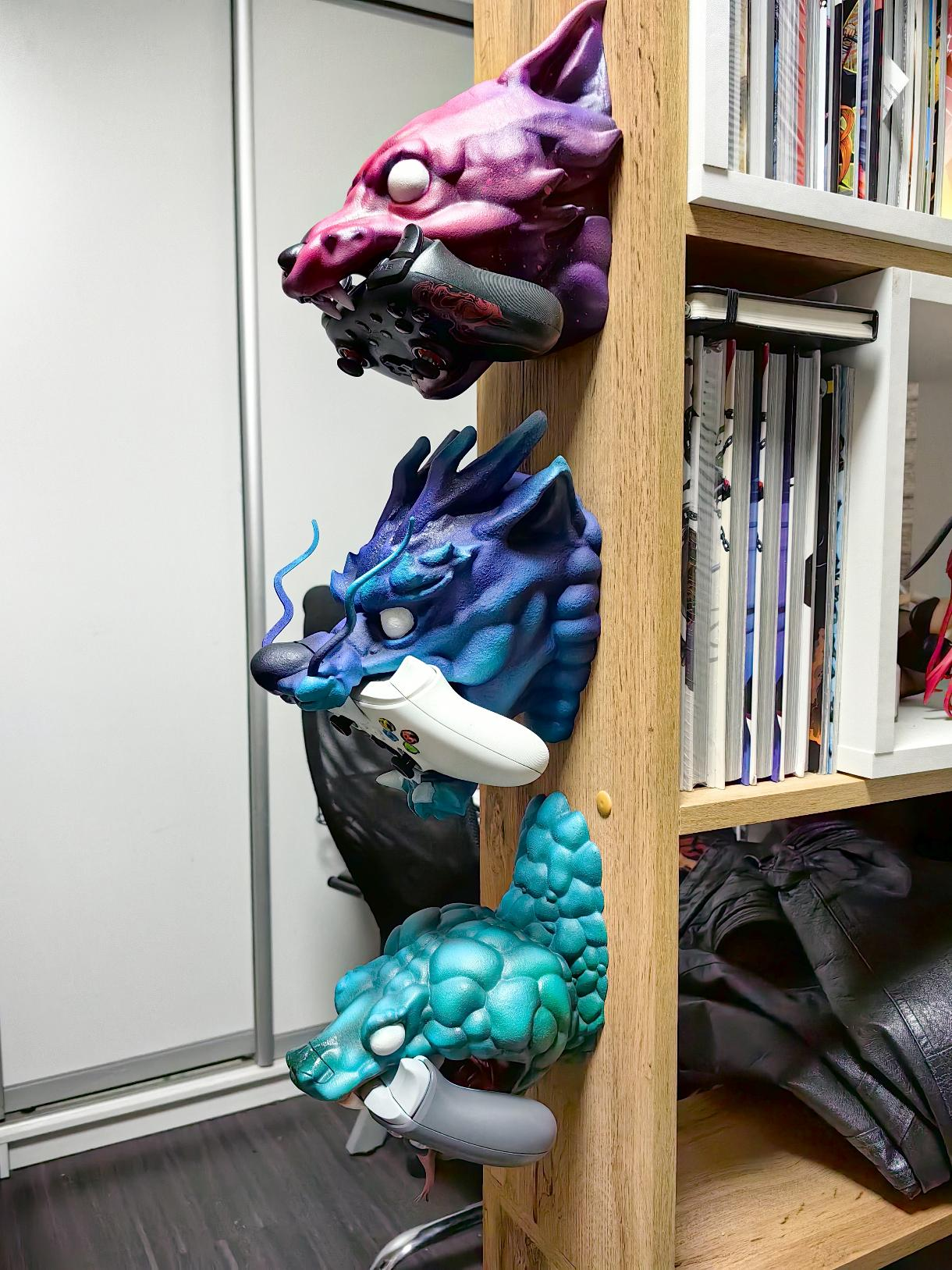
He also finds inspiration in how others bring his designs to life. From careful sanding to detailed painting, users often elevate the work into something entirely new; turning each piece into a form of collaboration.
Looking Ahead
When thinking about the future, Pierre-Henri keeps his focus grounded.
He hopes to continue creating, while also exploring higher-end production methods and materials. Rather than scaling into mass production, his interest lies in small, refined batches; limited, collectible pieces that push quality and detail further.
At the core, the goal remains the same: to keep creating, learning, and evolving alongside the technology.
New Release: CyberSkull Apex Controller Stand
Just last week, Pierre-Henri launched one of his most ambitious designs yet: CyberSkull Apex Controller Stand.
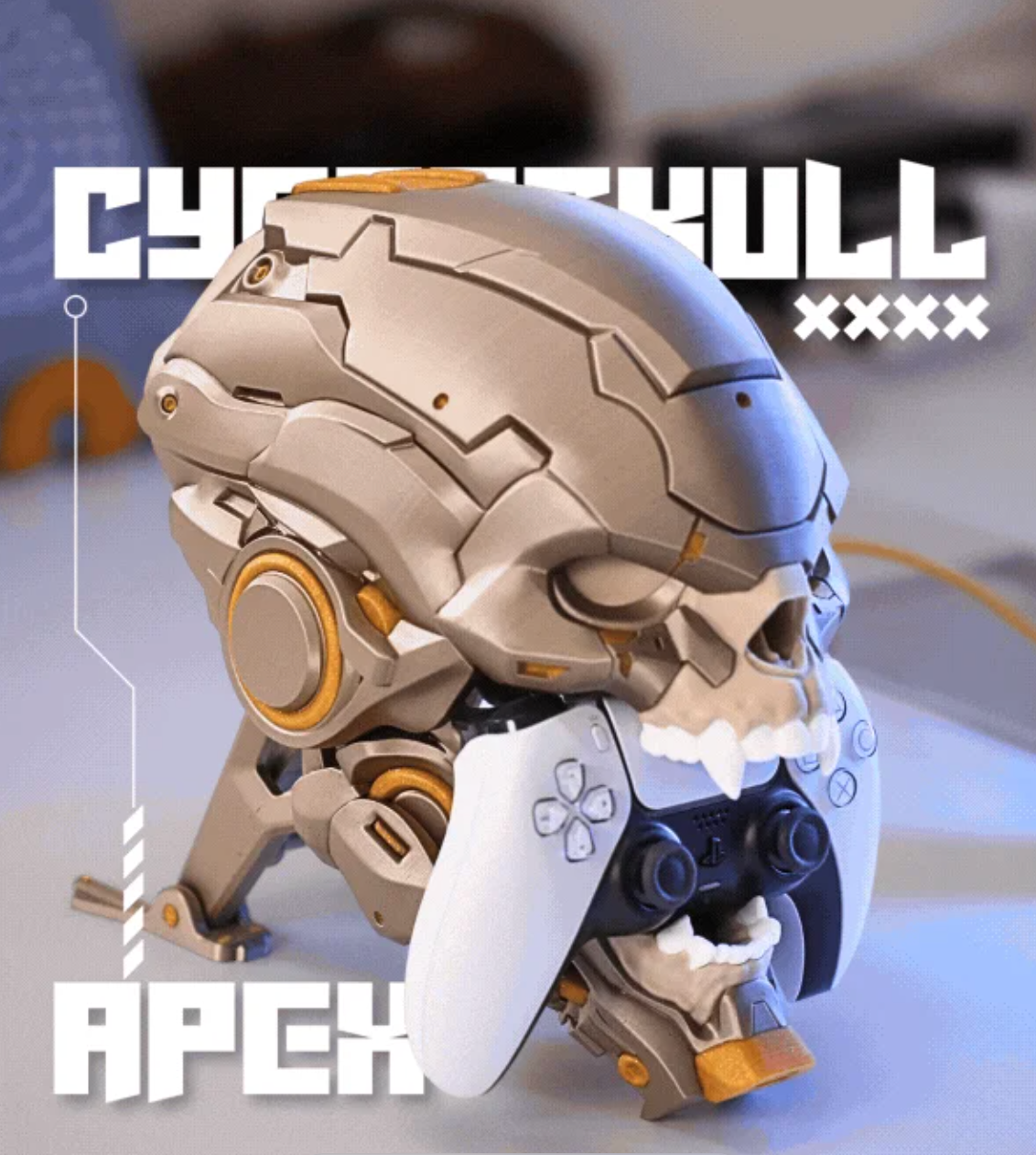
A sculptural, cyberpunk-inspired piece designed to transform a simple controller stand into something far more expressive.
Inspired by the atmospheric worlds of Ghost in the Shell and Akira, the design blends sci-fi influence with gaming functionality; bringing a sense of identity and character back into desk setups.
Where most controller stands lean minimal and utilitarian, this project takes a different approach. It’s designed to be seen, interacted with, and enjoyed; not hidden away.
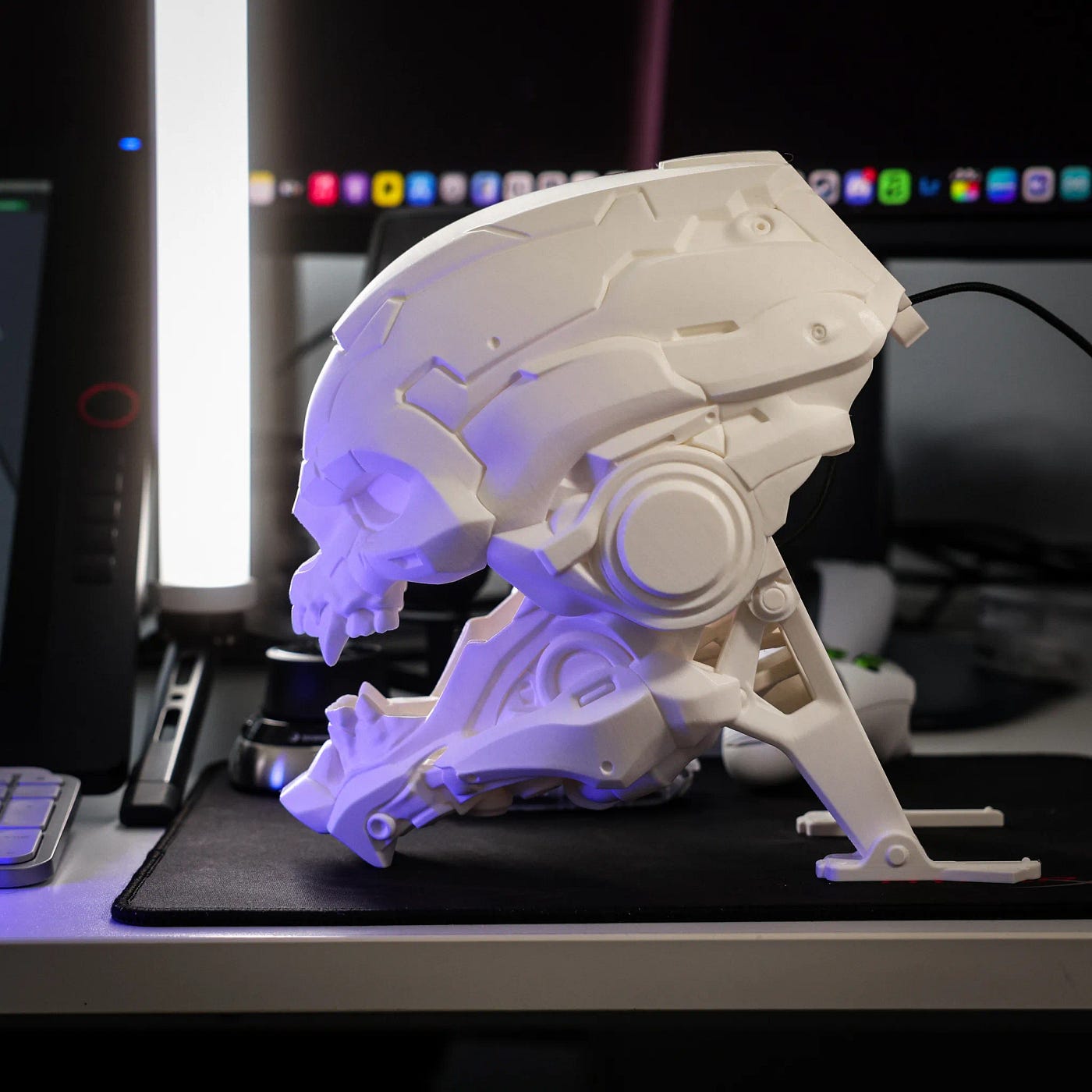
Every detail has been carefully modeled, from the structural elements to the smallest components. The result is a highly customizable design, where each part can be printed in different colors and assembled without glue.
It’s a piece built not just for function, but for experience.
From concept to final product, the design took approximately two months to complete… balancing visual identity, usability, and printability at every stage.
Even details that may never be seen, like the underside of the skull, have been fully realized. Hidden features, thoughtful assembly, and refined cable routing all contribute to a design that reveals more the closer you look.
At its core, CyberSkull Apex represents what Holoprops is about:
pushing beyond utility to create objects that bring emotion, personality, and a sense of discovery into everyday spaces.
Join our Thangs Discord community to connect and share your feedback, and whether you’re a designer or maker, remember to include @Thangs3D in your social media posts!
.png)