


Medium Kiss Lock Clutch with new hand sewn option
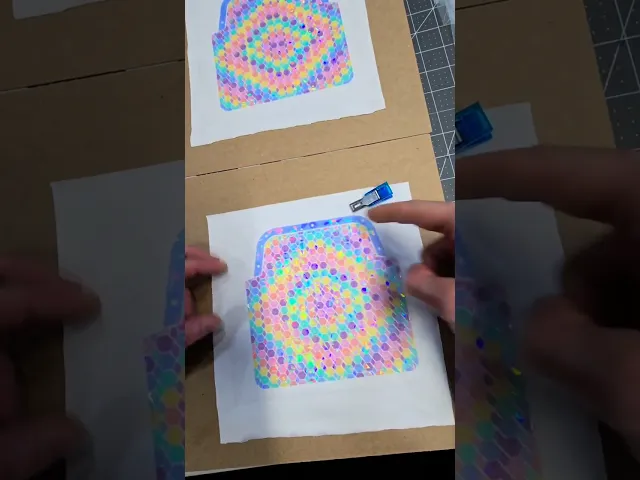
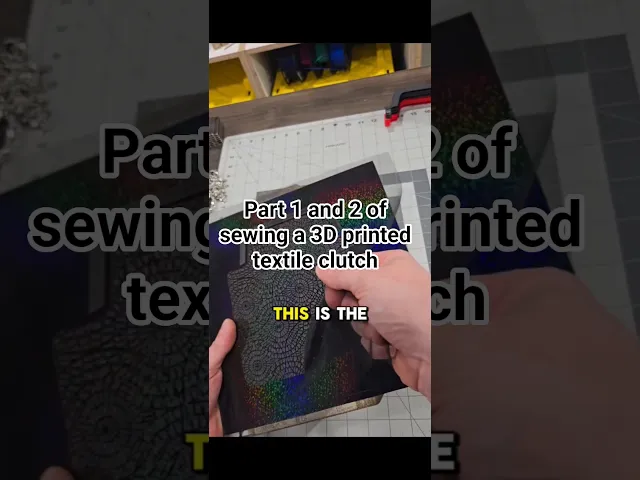
This is a medium sized 3D printed fabric clutch with 3D printed hardware with a kiss lock closure.
Things to note -
There are two hinged versions of the hardware, one with a wider opening, and one with a more shallow opening.
There are two attachment styles, one that can be glued (that is a solid piece) and one that has holes in it for hand sewing.
If you would like the hand sewn finish, pair up the hardware with holes with the textile with holes.
The hardware and the smallest bag version can be printed on the A1 Mini.
There are 3 premade grid patterned clutches included in the 3mf, in addition to the negative part modifiers where you can customize the textile that you'd like to use for your clutch.
There are spacers that can be printed to make the hinge a tighter fit depending on the filament you're printing with.
There are thin covers that can be printed to cover up the inside stitching. These can be applied directly on top of the stitching with some e6000 or fabric glue of your choice.
If you are starting from scratch, here is the process. Please refer to the included PDF guides for additional instructions.
Open a base textile (the example photos are using the dragon con textile found here - https://than.gs/m/1368954), followed by modifying the textile with the included medium clutch negative modifier. Center the modifier and verify it's scaled to 400mm x 400mm x 20mm, and it's z value is set to 0 (so it's intersecting the textile). Load in the textile clutch top STL onto the same plate, center, and move the Y value up so there is a uniform gap above the negative modifier. The last step is to add a pause command at layer 2, where fabric and magnets will be added. I print the hardware at a .16mm layer height, and the fabric at a .24mm layer height. Refer to the included PDF guides for more info.
Print the included hardware at a .16mm layer height. I print this with 25% honeycomb infill and 4 wall perimeters for added closure strength. Printing with silk PLA may lower the durability. After removing the supports and sewing your 3D textile fabric together (see guides) You now have the option to use some E6000, or hand sew them in with the hand sewn version.
This requires basic sewing skills - a straight stitch or a zig zag stitch, a 3d printer, some mesh fabric, and about 30-60 minutes of assembly time depending on skill level. There is a PDF guide to show you step by step on how to print and assemble this purse, in addition to many other guides to help you further modify the design.
If you have any questions, please don't hesitate to contact me at Kaizen3DPrints@gmail.com
License Summary: Personal use only unless you hold a Commercial License. No resale or sharing of files. Selling printed models allowed only with an active Commercial License.
Medium Kiss Lock Clutch with new hand sewn option

Abstract art #2

Hand sewn vertical wallet

256x256 PFLAT sheet holder

Massage Roller

Spinning gear fidget ring
Flat band fidget ring

Large TPU foldover bag

Adjustable Strap (48"/122cm max length)

Small Foldover Bag
Customizable Passport Wallet

Tall TPU Bifold Wallet for sewing

Vertical Wallet for Chicago Screws

Square Grid Negative Modifier

Hex Grid Fabric Modifier

Heart Pixel Pattern Textile and Modifiers

Vertical TPU wallet with rivets and grommets

Flippy heart textile and modifiers

Foldable TPU bag sized for Snapmaker U1

Crossed Basket Weave Textile / Modifier
