


COLLAPSING CLEARANCE TEST.stl
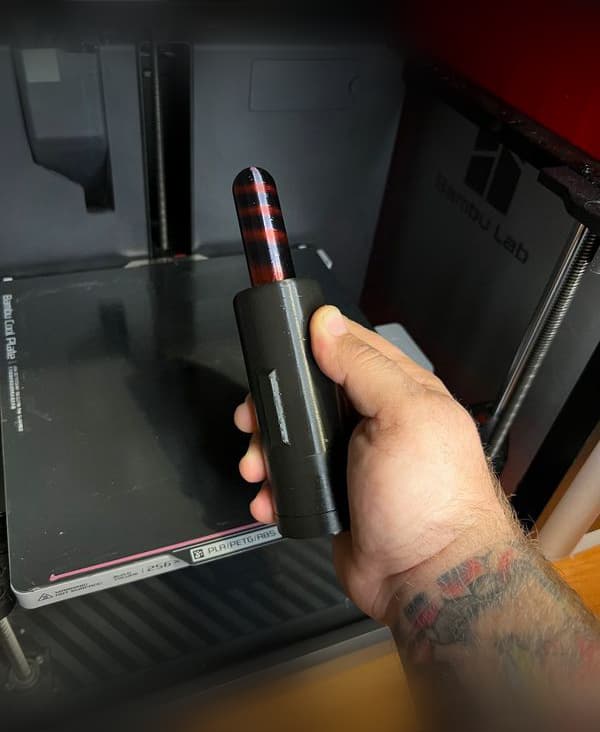
This print is used to gauge your success when printings a full size print-in-place collapsing swords or lightsaber. Each ring has a different amount of clearance. How many rings are free after printing will tell you what clearance your printer is capable of. The rings should easily fall out and not be attached with any stringing.
I design the blades with .5mm of clearance. If your printer can print that, or better yet .4mm you should have a very high rate of success. I was able to clear .4mm with my standard setting but got down to .25 with more some aggressive settings. It causes some under extrusion as the layer seams so I will probably will keep my standard profile.
Center Ring 1= 1mm Clearance Ring 2= .75mm Clearance Ring 3= .5 mm Clearance Ring 4=. 4 mm Clearance Outer Ring 5= .25 mm Clearance
After printing, if you need to tune your printer to get a better layer seam I would use the original. test print
Printed on the Mulcore Core-XY 3D
Support and Licensing If you would like to help support more free models please consider joining my Thangs Membership. Get permission to sell physical copies of my models by joining The Collapsing Arsenal
COLLAPSING CLEARANCE TEST.stl
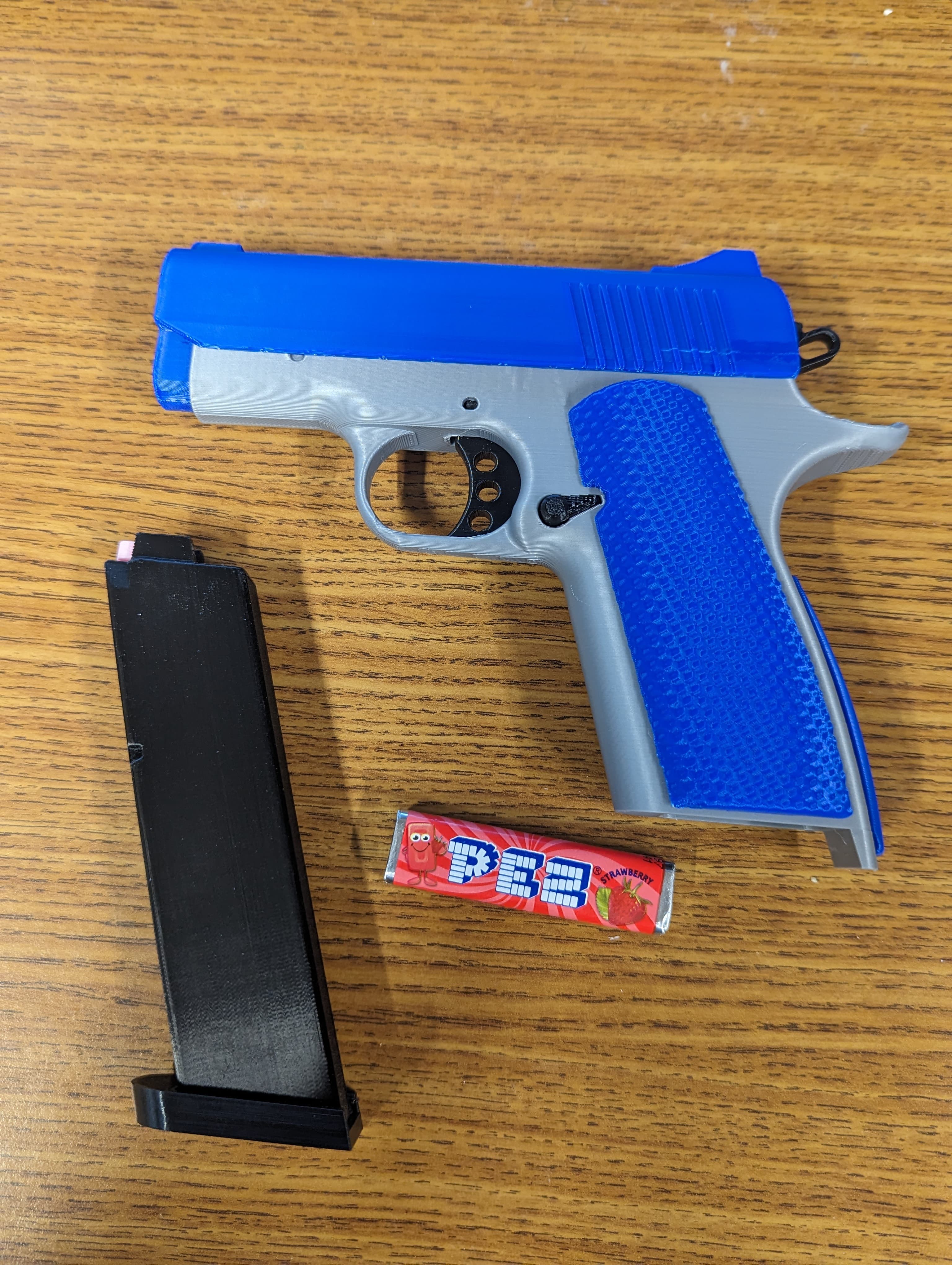
CandyGat PZ11 - PEZ Shooter
.png&w=3840&q=75)
Noxie – Print‑Ready Articulated Dragon for 3D Printing
Print-In-Place Miniature Easel :: Art & Hobby Display Stand
FLEXI OTTER - POSEABLE - FUN ANIMAL - ARTICULATED - PRINT IN PLACE

Destroyed Apartment Buildings

Marvel Rivals Gambit Collapsing Staff

Destroyed Apartment Buildings - 8, 12 and 16 Storey

The Universal "Safe-Grip" Guitar Wall Hanger

OmniJig station

Pegboard - Dispensing Box Holder
Mario Kart 64 Style Go-Kart (for San-Ei Plushs and Amiibos)
Comically Small Collapsing Saber! - Free for a limited time!
.jpg&w=3840&q=75)
Heart Shaped Box (Snap)

Crushed Bottle Artist’s Catchall – 3D Printed Acrylic Paint Tube Holder (Sculptural Studio Organizer

Galactic Observatory Desk Caddy

Minimalist Lava Lamp with a Modern Texture - Table Lamp by Noctura Luxe

Tiger statue.stl
.png&w=3840&q=75)
Minimalist Soap Holder with Drainage Tray – Honeycomb Grid, Fast-Drying Bathroom Design (STL)

Plusle & Minun Pokemon - Hand Magnetic - Articulated Fidget Toy & Keychain

Haven’t printed the test yet but if I would get 4mm max will that be enough to make a collapsing sword
If you get .4 you should have no problems. Then as long as you have good bed adhesion, you should be good.